Few things turn a relaxed person into a frantic 1 a.m. internet researcher faster than the phrase “we’ll need you to complete a screening before your start date.”
Suddenly, you’re doing mental math about last weekend. You’re reading forum posts from 2011. Someone’s cousin swears by cranberry juice.
Let’s slow down and look at what the science actually says. Cannabis leaves your system on a schedule that has less to do with how high you got and a lot more to do with how often you use, what kind of test you’re facing, and how your body stores fat.
Here’s the honest version, minus the panic.
Quick Answer: How Long Does Weed Stay in Your System?
THC itself fades within hours. The byproduct that drug tests look for sticks around for considerably longer.
- Occasional use (once or twice): typically detectable in urine for around 3 days
- Regular use (a few times a week): roughly 7 to 21 days
- Daily or near-daily use: 30 days or more, sometimes longer
- Blood: a few hours up to a couple of days
- Saliva: usually 24 to 30 hours
- Hair: up to 90 days
These are ranges, not guarantees. Two people can share the same joint on the same night and test clear a week apart.
What Drug Tests Are Actually Measuring
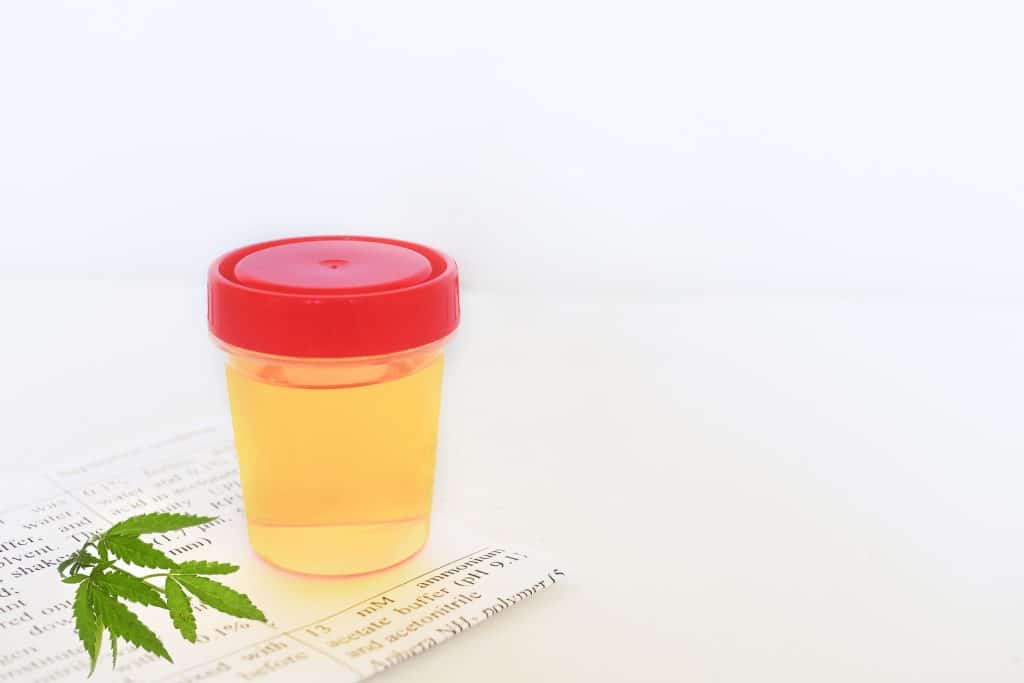
Here’s the part most people get wrong: standard drug tests aren’t looking for THC.
They’re looking for THC-COOH, an inactive metabolite your liver produces after processing THC. It doesn’t get you high. It doesn’t prove you’re impaired right now. It only proves cannabis passed through at some point.
That distinction matters more than most employers acknowledge. Research published through the National Institutes of Health notes that detecting cannabinoids in urine indicates prior exposure, but the long excretion half-life of THC-COOH makes it genuinely difficult to pinpoint when someone last used.
The reason it lingers comes down to chemistry. THC is fat-soluble, so instead of flushing out with water, it settles into fat tissue and trickles back into your bloodstream over days or weeks. It’s like your body is running a very slow-release capsule you never asked for.
Weed Drug Test Detection Time by Test Type
Each test catches a different window, and they’re not interchangeable.
Urine is the most common type of workplace screening and has the longest practical window for regular consumers. Most standard panels screen at a 50 ng/mL cutoff, which is why occasional users often clear faster than the internet’s worst-case scenarios suggest.
Blood has the shortest window and is generally reserved for accident investigations or impairment questions, since it’s the closest thing to a “recent use” measurement.
Saliva catches recent use, typically within a day or so, and shows up in roadside and some pre-shift testing.
Hair stretches back roughly 90 days and reflects a pattern of use rather than a single session.
Edibles follow a different curve than smoking, since digestion changes both onset and metabolite concentration. We get into that timeline in more detail in our guide to how long edibles last.
Why Your Timeline Isn’t Your Friend’s Timeline
Detection windows swing wildly between people, and the reasons are mostly unglamorous biology.
- Frequency of use. The single biggest factor. Metabolites accumulate faster than the body clears them, so daily consumers build a reserve that occasional users never do.
- Body composition. THC parks itself in fat tissue, so a higher body fat percentage generally means a longer tail.
- Consumption method. Ingested cannabis tends to produce higher metabolite concentrations than inhaled cannabis at comparable doses.
- Potency and dose. More THC in means more THC-COOH out.
- Individual metabolism. Some bodies are simply faster at this than others.
A Johns Hopkins study that followed young adult cannabis users through a month of verified abstinence found a median detection window of about 10 days, with an estimated range running from 4 to 80 days. Even among participants with more than 25 days of confirmed abstinence, a meaningful share were still testing positive.
Translation: Anyone offering you a precise number on how long weed stays in your system is guessing.
CBD vs THC Detection: Can CBD Make You Fail a Drug Test?
This one catches people off guard.
CBD itself doesn’t register on a standard drug panel. Tests screen for THC metabolites, not cannabidiol. The complication is what else might be in the bottle.
- Full-spectrum CBD contains trace THC by design. With consistent daily use, that trace can accumulate enough to trigger a positive.
- Broad-spectrum CBD has THC removed, though small amounts occasionally survive processing.
- CBD isolate is pure cannabidiol and carries the lowest risk.
The FDA has flagged concerns about products containing cannabis and cannabis-derived compounds, including inconsistent labeling and contents that don’t match the packaging. Which is a diplomatic way of saying not every bottle is telling the truth.
If you’re subject to testing and still want CBD products, ask a budtender about isolate or broad-spectrum options and look for a certificate of analysis. Our THC vs. CBD breakdown covers how the two compounds differ more broadly.
How to Detox From Cannabis: What Works and What’s a Waste of Money
Search how to detox from cannabis, and you’ll find kits, teas, capsules, and at least one very confident guy on YouTube.
Here’s the uncomfortable truth: time and abstinence are the only reliable methods. Everything else is either unproven or actively counterproductive.
What doesn’t do what people hope:
- Detox drinks and kits. Most work by dilution, not elimination. Labs check creatinine and specific gravity, and a diluted sample often gets flagged as invalid, which frequently means retesting under closer supervision.
- Drinking gallons of water. Same problem, minus the $40.
- Exercising right before a test. This can backfire. Burning fat may release stored metabolites back into circulation, temporarily nudging levels up rather than down.
- Cranberry juice, vinegar, and megadose niacin. No meaningful evidence, and high-dose niacin carries real risks of its own.
What actually helps is stopping and budgeting time proportional to your usage. If you’re planning a tolerance break ahead of a screening, count backward generously. An occasional consumer might need a week. A daily consumer should think in terms of weeks, not days.
One thing we’ll say plainly: this isn’t a guide to beating a test. If your work involves driving, heavy machinery, or anyone else’s safety, that’s a line worth respecting on its own merits.
What Michigan Cannabis Law Covers, and What It Doesn’t
Recreational cannabis is legal in Michigan for adults 21 and older. Your employment is a separate conversation entirely.
The Michigan Regulation and Taxation of Marihuana Act explicitly preserves employer rights. Employers can maintain zero-tolerance policies, test applicants and employees, and refuse to hire them, or discipline/terminate someone over a positive result. That holds even when the use happened off duty, at home, on your own time.
Interestingly enough, as of October 2023, the Michigan Civil Service Commission stopped requiring pre-employment cannabis testing for most state government positions, though safety-sensitive roles and federally funded jobs may still screen.
Legal to buy and protected at work are two very different things. Check your employer’s actual policy before assuming anything.
The Final Toke on Cannabis Screening
If a screening is on your calendar, the only approach with evidence behind it is stopping early and giving your body room to do its job. Everything else is marketing with a nice label.
Shop Smarter at Mystic Cannabis in Memphis, MI
Have questions about potency, CBD ratios, or which products fit your routine? The budtenders at Mystic Cannabis in Memphis, Michigan, are happy to walk you through the menu, including flower, edibles, CBD products, and tinctures. Good questions are always welcome, judgment never is. Browse our menu or stop in and say hi.